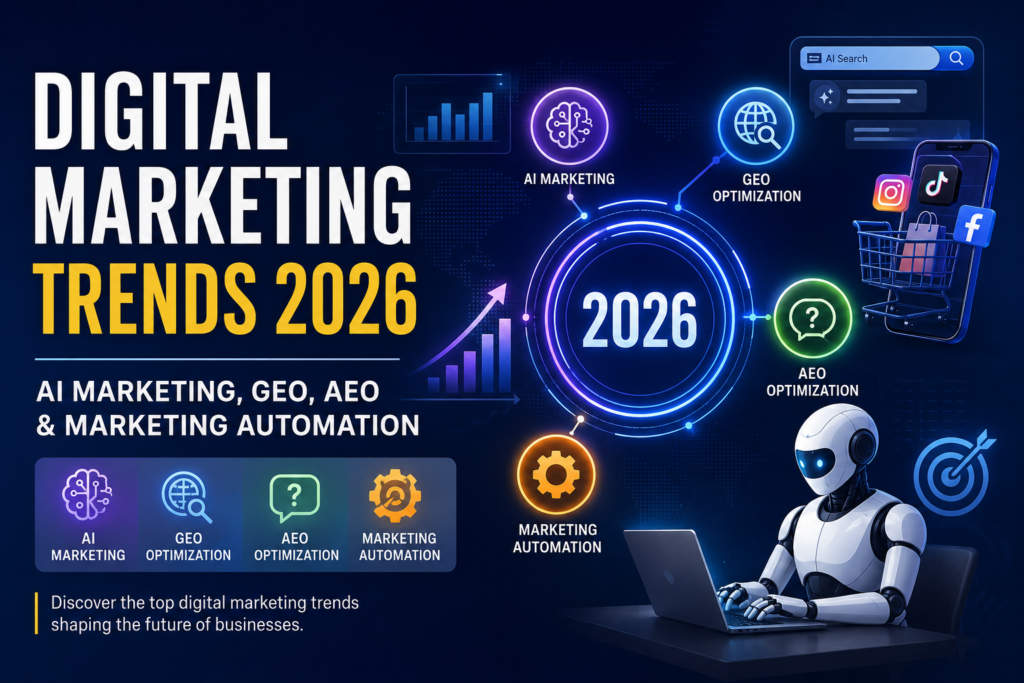
Digital marketing is changing faster than most businesses can keep up with. Just a few years ago, ranking on Google and running Facebook ads were enough to generate leads and sales. Today, the game has completely changed.
Artificial Intelligence is influencing search results, social media platforms are becoming online marketplaces, and automation tools are helping brands connect with customers 24/7. As we move into 2026, businesses that adapt to these changes will have a major advantage over their competitors.
Whether you’re a business owner, marketer, freelancer, or startup founder, understanding the latest digital marketing trends can help you stay ahead and grow faster.
The New Era of Digital Marketing
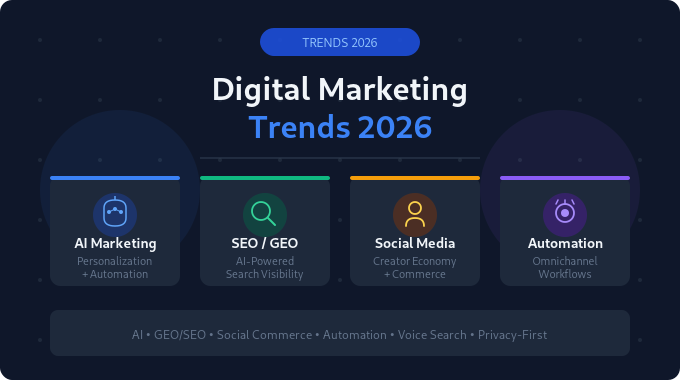
The biggest shift happening right now is the integration of Artificial Intelligence into almost every aspect of marketing. From content creation and customer support to data analysis and advertising, AI is helping brands work smarter and achieve better results with less effort.
Businesses are increasingly using AI-powered tools to create content, manage campaigns, analyze customer behavior, and improve decision-making. What once required an entire marketing team can now be accomplished with the help of intelligent automation and AI-driven platforms.
At the same time, search behavior is changing. People are no longer relying only on traditional Google searches. They are using AI-powered tools like ChatGPT, Gemini, and Google AI Overviews to get instant answers. This means businesses need to rethink how they create content and how they appear online.
Companies that embrace AI early will gain a competitive advantage by improving productivity, reducing costs, and delivering more personalized experiences to their customers.
SEO Is No Longer Just About Rankings
For years, SEO was focused on ranking websites on Google’s first page. While rankings still matter, 2026 introduces a new challenge: getting visibility inside AI-generated answers.
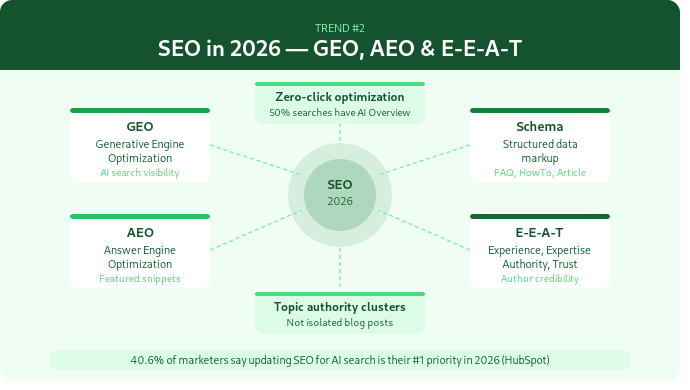
This is where GEO (Generative Engine Optimization) and AEO (Answer Engine Optimization) become important. GEO helps content appear in AI-powered search results, while AEO focuses on providing direct answers to user questions.
Instead of creating content only for search engines, businesses now need to create content that AI systems can understand, trust, and recommend. Websites that publish helpful, well-structured, and authoritative content will have a much better chance of appearing in AI-generated responses.
Another major trend is the rise of zero-click searches. Users often get the information they need directly from search results without visiting a website. To remain visible, brands must create high-quality content, use structured data, and build topical authority within their niche.
Google is also placing greater emphasis on E-E-A-T, which stands for Experience, Expertise, Authoritativeness, and Trustworthiness. Businesses that demonstrate real expertise and provide valuable information will perform significantly better than websites publishing generic or low-quality content.
If you want your website to succeed in 2026, optimizing for AI search will become just as important as traditional SEO.
Social Media Is Becoming a Sales Channel
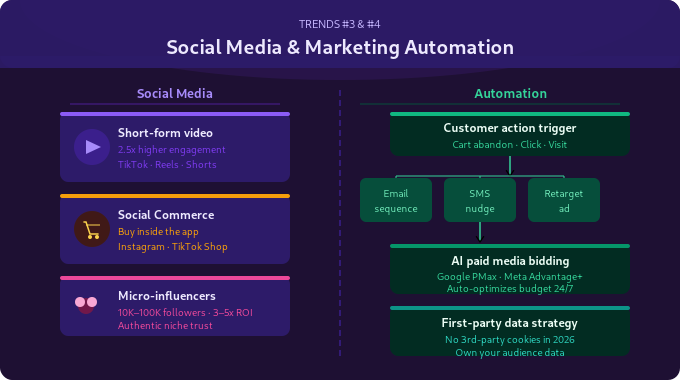
Social media is no longer just a platform for sharing photos and updates. It has evolved into a complete sales ecosystem where businesses can attract, engage, and convert customers.
Platforms like Instagram, Facebook, and TikTok now allow users to discover products, interact with brands, and make purchases without leaving the app. This shift toward social commerce is creating huge opportunities for businesses of all sizes.
Consumers are spending more time on social platforms than ever before, making them one of the most powerful channels for brand growth. Businesses that create engaging content and build strong communities are seeing impressive results.
Another trend dominating social media is short-form video content. Instagram Reels, YouTube Shorts, and TikTok videos are generating significantly higher engagement compared to traditional content formats.
People prefer quick, informative, and entertaining videos that provide value within seconds. Brands that consistently create educational and engaging video content are experiencing better reach, stronger engagement, and higher conversion rates.
The rise of micro-influencers is also changing the marketing landscape. Instead of working only with celebrities, brands are collaborating with smaller creators who have highly engaged audiences. These partnerships often deliver better ROI because followers trust recommendations from creators they relate to.
Marketing Automation Is Becoming Essential
Marketing automation is no longer a luxury; it has become a necessity for businesses looking to scale efficiently.
One of the biggest challenges companies face is managing customer interactions across multiple channels. Marketing automation solves this problem by handling repetitive tasks automatically.
Automation tools can send welcome emails, follow up with leads, recover abandoned carts, schedule social media posts, and nurture customers throughout their buying journey.
Imagine a customer visits your website, explores your services, and leaves without taking action. An automated workflow can instantly send a follow-up email, show retargeting advertisements, and encourage that visitor to return.
This process happens without any manual effort, helping businesses save time while improving conversion rates. As competition increases, automation is becoming one of the most effective ways to improve marketing performance.
First-Party Data Will Be a Business Asset
Privacy regulations and the gradual disappearance of third-party cookies are forcing marketers to rethink data collection strategies.
Businesses can no longer rely entirely on external platforms for customer information. Instead, they need to focus on building their own audience through email subscriptions, newsletters, lead magnets, loyalty programs, and online communities.
First-party data allows businesses to better understand their customers while maintaining greater control over their marketing efforts. Companies that build strong databases today will be in a much stronger position in the future.
The brands that own their audience data will be less dependent on algorithm changes and advertising platforms, creating long-term stability and growth.
What Should Businesses Focus on in 2026?
The future of digital marketing isn’t about following every trend. It’s about understanding where consumer behavior is heading and adapting accordingly.
Businesses should focus on:
• Optimizing content for AI Search
• Building authority through high-quality content
• Creating short-form video content
• Leveraging social commerce opportunities
• Using marketing automation to improve efficiency
• Collecting and utilizing first-party data
• Building trust through E-E-A-T principles
Companies that prioritize these areas will be better prepared for the future and more likely to achieve sustainable growth.
Final Thoughts
Digital Marketing Trends 2026 is being shaped by Artificial Intelligence, AI-powered search engines, social commerce, and automation. The strategies that worked a few years ago are evolving rapidly, and businesses must evolve with them.
Brands that embrace GEO, AEO, AI marketing, video content, and automation will have a clear advantage in attracting customers and growing online. The future belongs to businesses that combine technology with authentic human connection.
Those who adapt early won’t just keep up with change—they’ll lead it.
Looking for more insights on digital marketing, SEO, AI marketing, and business growth? Visit Adzine regularly for the latest industry updates, expert strategies, and actionable marketing tips
Good Information 👍