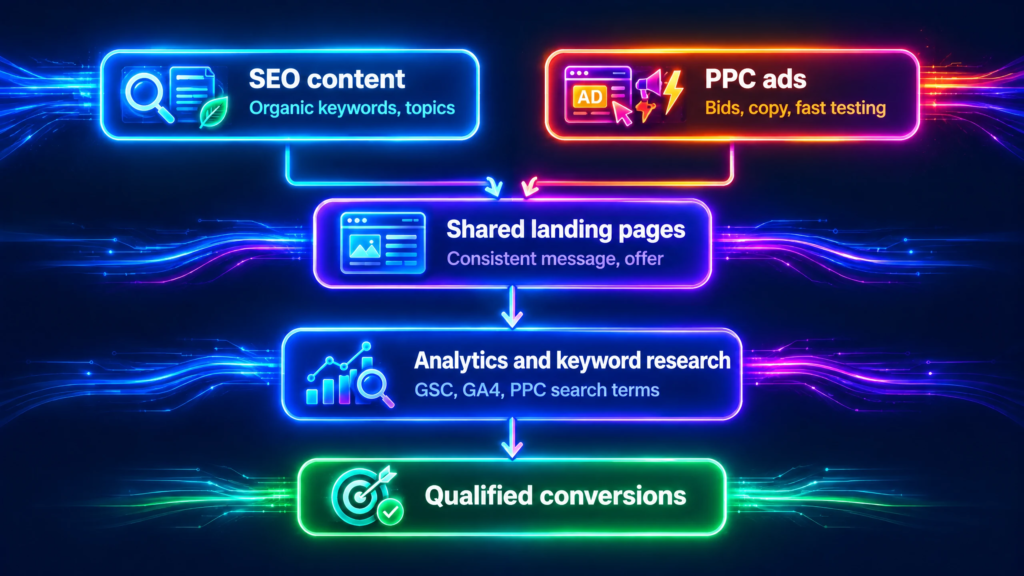
Many businesses treat SEO and PPC as two completely separate marketing activities. The SEO team works on rankings and content, while the paid advertising team focuses on clicks, bids, and campaign budgets. This approach can produce results, but it often leaves valuable data and growth opportunities unused.
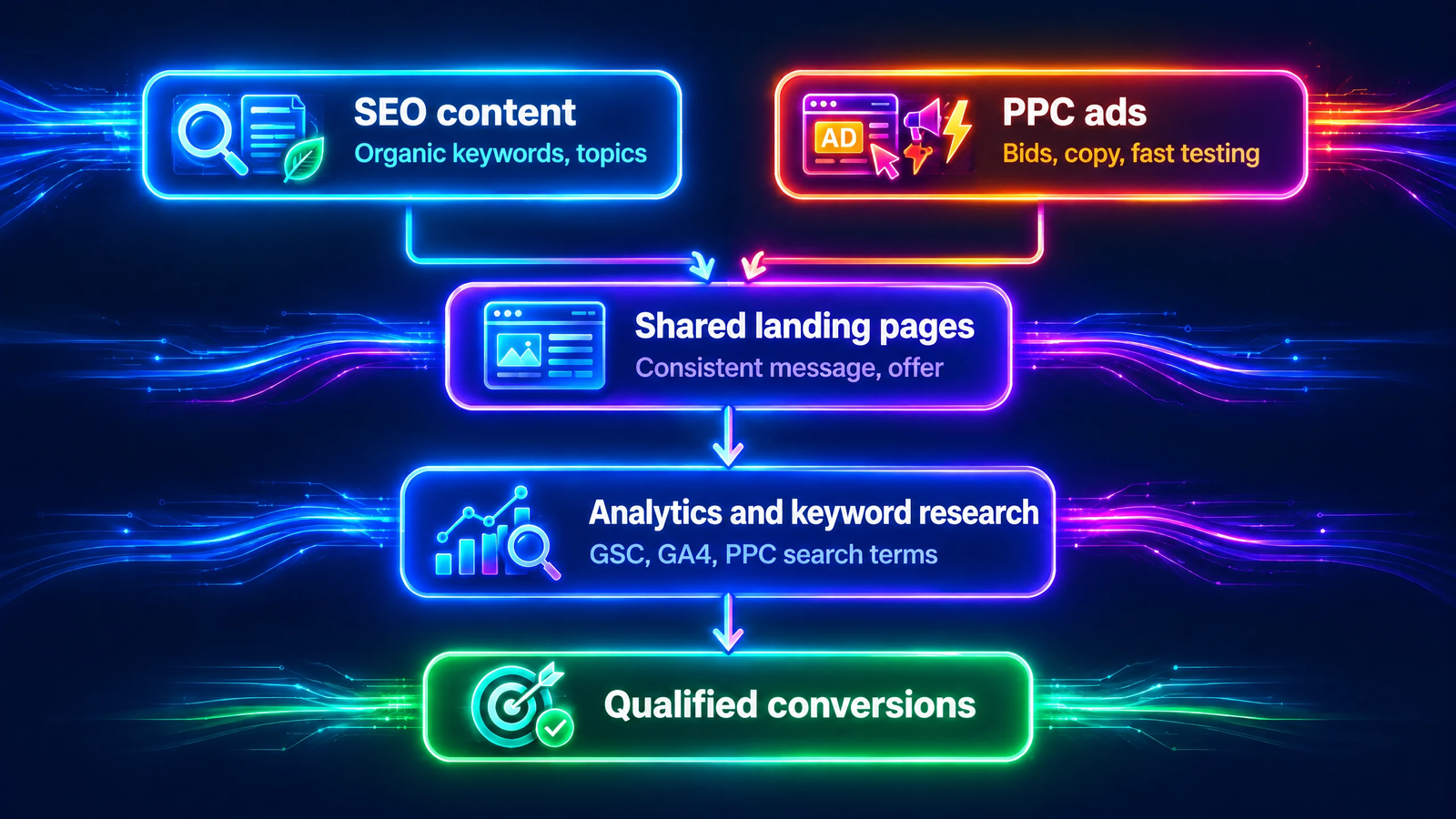
A better approach is SEO and PPC integration. SEO helps build long-term organic visibility, while PPC provides immediate access to high-intent searches and fast campaign feedback. When both channels share keyword insights, messaging, landing-page data, and conversion goals, search marketing becomes more coordinated and easier to optimise.
This guide explains how SEO and PPC work together, how to build an integrated strategy, which metrics to track, and which mistakes to avoid.
Important: PPC advertising does not directly improve organic rankings. Its value is indirect: it can provide keyword and message insights, capture demand quickly, support visibility, and help marketers make better SEO decisions.
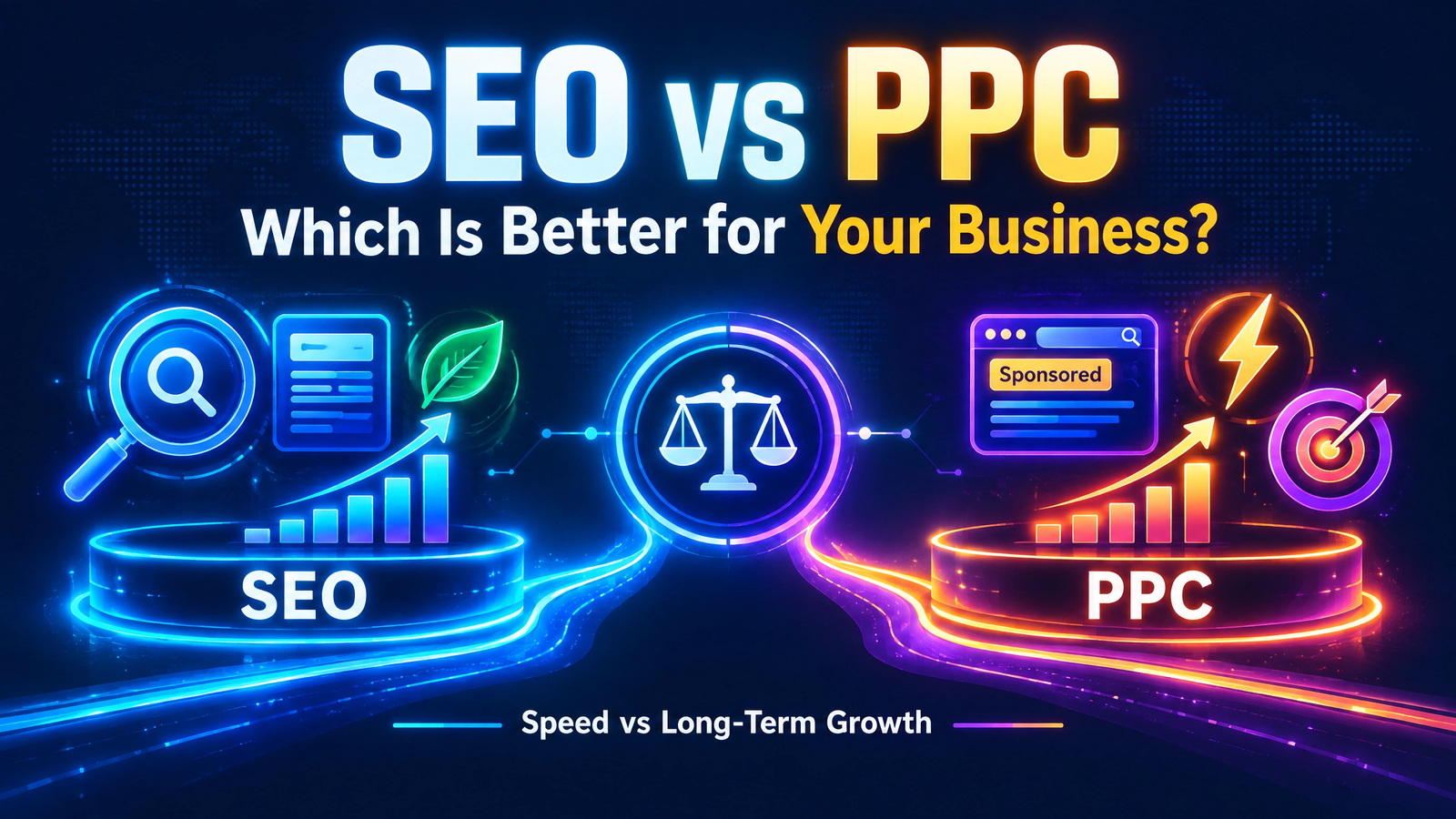
What is the difference between SEO and PPC?
Search engine optimisation, or SEO, improves a website’s organic visibility through relevant content, technical improvements, internal linking, user experience, and authority-building activities. SEO generally takes time to produce significant results, but successful pages can continue attracting organic traffic without paying for every click.
Pay-per-click advertising, or PPC, is a paid advertising model in which businesses bid for visibility on platforms such as Google Ads. PPC campaigns can generate traffic quickly and provide control over budgets, targeting, ad copy, locations, devices, and schedules. However, paid traffic depends on continued campaign investment.
| Factor | SEO | PPC |
|---|---|---|
| Traffic source | Organic search results | Paid search placements |
| Time to results | Usually gradual | Often immediate after launch |
| Cost structure | Content, technical, and strategic investment | Media spend plus campaign management |
| Control | Limited direct control over rankings | Greater control over budget, targeting, and ad copy |
| Sustainability | Strong pages may continue generating visibility | Traffic usually reduces when campaigns stop |
| Best use cases | Education, discovery, authority, and long-term demand | High-intent searches, testing, launches, and remarketing |
SEO and PPC are not identical channels, and one should not automatically replace the other. The right balance depends on your business model, customer journey, margins, competition, and growth objectives.
Why SEO and PPC integration matters
1. PPC can validate SEO keyword opportunities
SEO content requires time and resources. Before investing heavily in a competitive topic, PPC data can help you understand whether a keyword or message attracts relevant users.
For example, a PPC campaign may show that users respond more strongly to “affordable digital marketing services for small businesses” than to a broader phrase such as “digital marketing agency.” That insight can influence SEO page titles, service-page copy, blog topics, and supporting content.
PPC data should not be copied blindly into an SEO plan. Evaluate the search term alongside qualified leads, conversion quality, cost per qualified lead, and customer value. A keyword that produces clicks but no valuable enquiries may not deserve SEO priority.
2. SEO data can improve PPC targeting
Organic search data can reveal queries, topics, and pages that paid campaigns may not yet target. Google Search Console can show impressions, clicks, queries, and pages receiving organic visibility. Analytics data can help identify pages that attract engaged users or contribute to conversions.
These insights can support PPC decisions such as:
- Creating new ad groups for long-tail search terms.
- Improving ad headlines and descriptions.
- Adding irrelevant queries as negative keywords.
- Sending users to more relevant landing pages.
- Identifying new audience interests and content themes.
Semrush also highlights the value of combining PPC and SEO data to understand which keywords, messages, and landing pages perform best across the search journey.
3. Your brand can occupy more search-result visibility
For selected high-value searches, a business may appear in both paid and organic results. This can create additional visibility and give users more than one opportunity to interact with the brand.
However, appearing in both places is not automatically profitable. Branded and non-branded searches should be evaluated separately. If your business already ranks strongly for a branded keyword, test whether paid advertising generates incremental conversions before increasing or reducing the budget.
The objective should not be to “own” every search result at any cost. The objective should be to increase qualified visibility and profitable conversions.
4. Consistent messaging can improve the user experience
A user who clicks an ad should see a landing page that reflects the promise made in the ad. The same principle applies to organic search results. The search snippet, headline, offer, benefits, proof points, and call to action should feel connected.
For example, if a PPC ad promotes “performance-focused SEO services for local businesses,” the landing page should clearly explain that service, its process, expected deliverables, and next step. Sending the visitor to a generic homepage can weaken relevance and reduce conversion opportunities.
Coordinating ad messaging with SEO pages can also strengthen brand consistency. Carnegie Higher Ed recommends aligning messaging, branding, web pages, and keyword insights across paid and organic campaigns.
5. Organic traffic can support remarketing
Many visitors do not convert during their first session. A visitor may read a blog post, compare providers, or leave the website to discuss the purchase internally. Subject to consent requirements and advertising-platform policies, remarketing can help bring relevant visitors back to the website.
Remarketing audiences should be managed carefully. Use frequency controls, exclude converted users, and create messages based on the user’s previous interaction. Someone who viewed an educational article may need a guide or case study, while someone who visited a service page may be ready for a consultation offer.
How to build an integrated SEO and PPC strategy
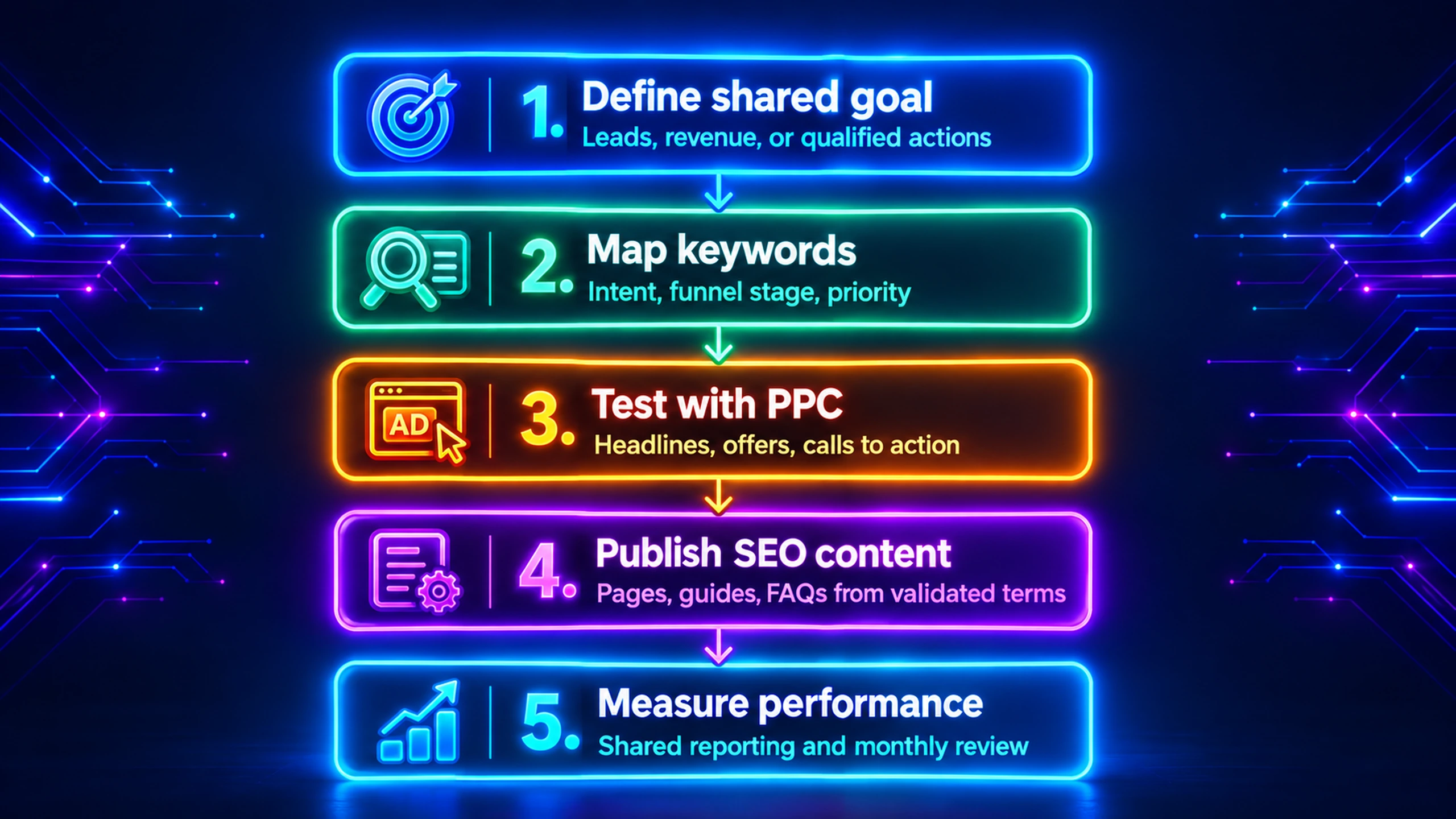
Step 1: Define a shared business objective
Do not make traffic the only objective. Define the business outcome that both channels should support. Depending on your business, this could be qualified leads, consultation requests, demo bookings, online purchases, application starts, or revenue.
Adzine’s digital marketing services include SEO, PPC advertising, Meta Ads, Google Business Profile optimisation, e-commerce services, and lead-generation support. A shared objective helps these activities work as part of a larger growth plan instead of operating as disconnected campaigns.
Step 2: Create a unified keyword map
Build one keyword map for both SEO and PPC. Include the following fields:
| Keyword-map field | Purpose |
|---|---|
| Search query | Records the exact keyword or theme |
| Search intent | Identifies informational, commercial, or transactional intent |
| Funnel stage | Shows whether the query supports awareness, consideration, or conversion |
| Organic URL | Identifies the page currently ranking or planned for SEO |
| Paid status | Shows whether the keyword is active in PPC |
| Conversion data | Records leads, sales, revenue, or qualified actions |
| Priority | Helps teams decide what to test or optimise first |
| Owner | Makes responsibility clear between SEO and PPC teams |
This map helps prevent duplicate work and makes it easier to identify gaps. A high-intent query with no relevant organic page may be a strong content opportunity. A page with strong organic visibility but weak conversion performance may need a better offer or a paid landing-page test.
Step 3: Use PPC to test messages and offers
PPC allows marketers to test different headlines, value propositions, offers, and calls to action more quickly than SEO content can usually be changed and evaluated.
Do not select a winning message using CTR alone. Compare clicks with conversion rate, qualified lead rate, cost per qualified lead, and revenue. A message that produces fewer clicks but better leads may be more valuable than a message that generates high traffic with poor commercial intent.
Step 4: Turn validated insights into SEO content
Use PPC results to inform—not control—the SEO roadmap. High-performing paid search terms can become service pages, comparison articles, guides, FAQs, or supporting content clusters.
Combine PPC insights with:
- Google Search Console data.
- Customer and sales-team questions.
- Competitor content gaps.
- Search intent analysis.
- Existing organic performance.
- Product or service expertise.
This creates content that reflects both search demand and real customer needs.
Step 5: Align landing pages and internal links
A landing page should answer the user’s question, support the campaign promise, demonstrate credibility, and provide a clear next step. Use relevant internal links to guide users toward supporting services, case studies, FAQs, or contact pages.
For readers who want to compare the two channels in more detail, link naturally to Adzine’s guide on SEO vs. PPC: Which Is Better? Businesses evaluating local search can also explore Adzine’s Google Business Profile optimisation checklist, while e-commerce brands may benefit from the guide to product listing optimisation. These links support the topic without interrupting the reader’s journey.
Use descriptive anchor text, but avoid repeating the same keyword unnaturally across the page.
Step 6: Create shared reporting and review cycles
SEO and PPC teams should use a shared reporting process. Review paid search terms, spend, conversions, and campaign experiments regularly. Review organic queries, page performance, content growth, and technical issues on a consistent schedule.
A monthly combined review should answer questions such as:
- Which search terms produced qualified leads?
- Which landing pages supported both paid and organic traffic?
- Which ad messages should influence SEO content?
- Which organic pages deserve paid promotion?
- Where is keyword overlap wasteful or strategically useful?
- Are reported conversions duplicated or incorrectly attributed?
American Eagle recommends aligning teams around shared goals, KPIs, messaging, keywords, landing pages, and reporting dashboards.
Which KPIs should you track?
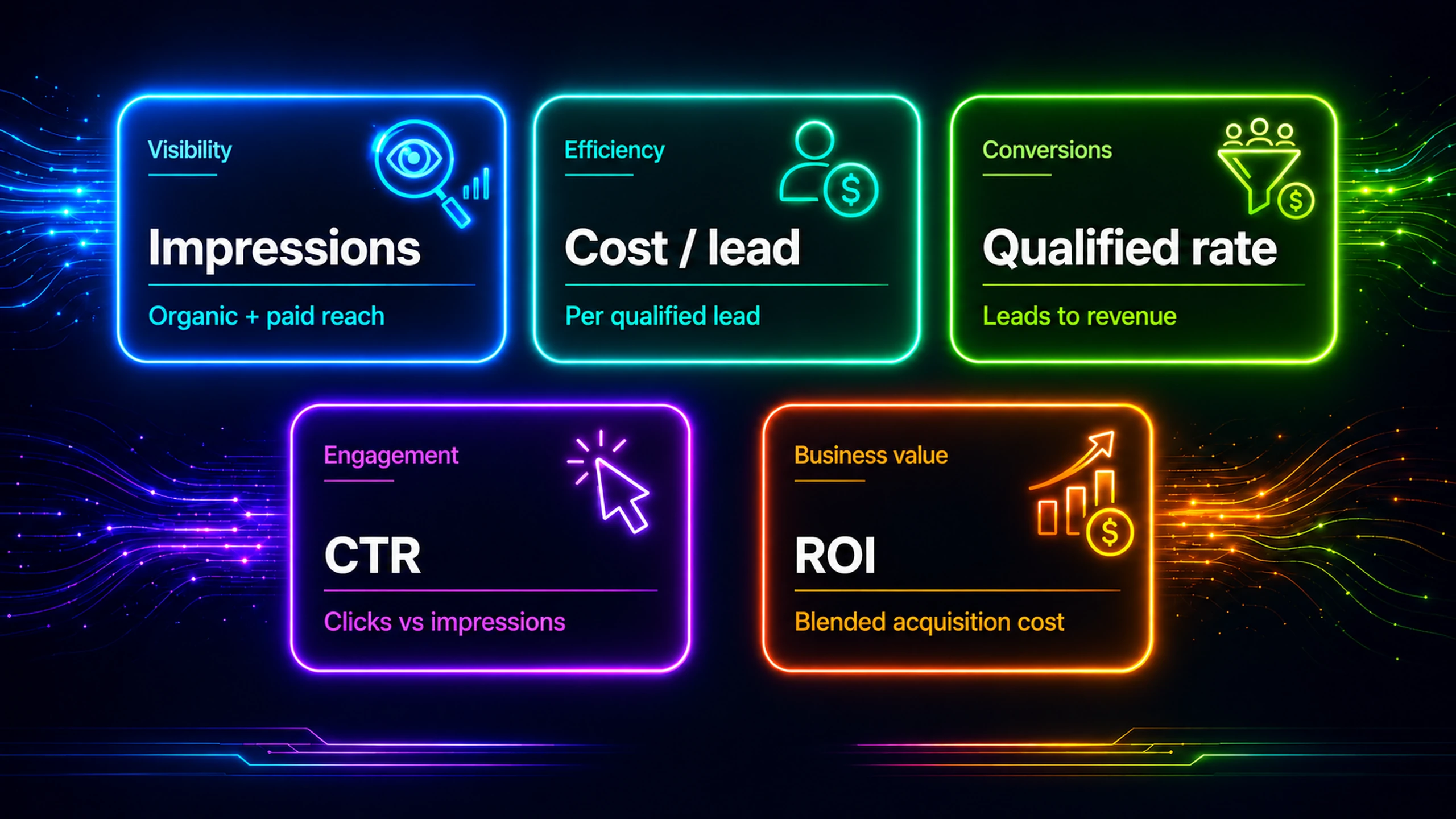
| Objective | Recommended metrics |
|---|---|
| Visibility | Organic impressions, paid impressions, impression share, non-branded visibility |
| Engagement | CTR, engaged sessions, landing-page engagement, return visits |
| Efficiency | CPC, cost per lead, cost per qualified lead, content investment |
| Conversions | Conversion rate, qualified lead rate, assisted conversions, revenue |
| Business value | Customer acquisition cost, pipeline value, margin, payback period |
| Quality control | Irrelevant search terms, duplicate conversions, invalid leads, attribution gaps |
Do not rely on one attribution model as a perfect representation of the customer journey. A customer may discover a business through an organic blog, return through a paid ad, and convert after a branded search or sales call. Use platform data, analytics, CRM information, and controlled tests wherever possible.
Common SEO and PPC integration mistakes
Treating PPC as a direct SEO ranking factor
Running paid advertisements does not guarantee improved organic rankings. PPC may provide data and visibility that support better decisions, but organic performance still depends on SEO quality, relevance, technical accessibility, content, authority, and user experience.
Optimising for clicks instead of qualified outcomes
High CTR is not the same as high business value. Always compare clicks with lead quality, sales, revenue, and customer acquisition cost.
Stopping paid campaigns without testing incrementality
If a website ranks strongly for a branded keyword, it may be tempting to stop the branded PPC campaign immediately. In some cases, paid ads may still generate incremental clicks or protect visibility during a temporary organic decline. Make the decision using controlled tests and conversion data rather than assumptions.
Sending every visitor to the homepage
A PPC ad for a specific service should lead to a relevant page—not a generic homepage. The landing page should match the search intent and provide the exact information promised in the ad.
Keeping SEO and PPC teams in separate silos
When teams do not share search terms, ad copy, landing-page findings, and conversion data, the business loses the feedback loop that makes integration valuable.
Publishing unsupported performance claims
Claims such as “3x more conversions” should not be presented as universal outcomes. Performance depends on industry, offer, baseline, budget, competition, tracking quality, landing-page experience, and attribution methodology.
Frequently asked questions
Should a small business invest in both SEO and PPC?
It depends on the business model, budget, competition, and growth timeline. PPC can help generate and test demand quickly, while SEO can build long-term organic visibility. A small business can begin with one focused PPC campaign and a targeted SEO content cluster, then expand based on qualified results.
Does PPC directly improve SEO rankings?
No. PPC does not guarantee better organic rankings. It can support SEO indirectly by providing keyword, audience, message, and landing-page insights.
How long should PPC run while SEO is developing?
There is no universal duration. Review PPC based on profitability, lead quality, cash flow, competition, conversion performance, and SEO progress. Avoid stopping or continuing campaigns solely because of assumptions about how long SEO should take.
Can the same landing page be used for SEO and PPC?
Sometimes. The right choice depends on search intent and the conversion stage. A shared page can work when it is relevant, fast, trustworthy, and aligned with both organic and paid visitors. In other cases, a dedicated PPC landing page and a broader SEO service page may perform better.
How should integrated search marketing success be measured?
Use shared conversion definitions, qualified lead quality, blended acquisition cost, revenue, organic growth, paid efficiency, and incrementality tests. Impressions, clicks, or rankings alone do not show the full business impact.
Final takeaway
SEO and PPC integration is not about running two campaigns and placing their reports next to each other. It is about creating a shared search marketing system in which PPC provides fast testing and demand capture, while SEO builds long-term visibility and authority.
The most effective starting point is practical: define a shared business goal, create one keyword map, align ad copy with landing pages, use PPC data to prioritise SEO opportunities, and measure qualified outcomes across both channels.
If your SEO and PPC activities are currently working in separate silos, contact Adzine for a structured review of your search visibility, keyword opportunities, landing pages, and conversion tracking.
Supper Informative 👍
Nice information thanks for sharing 👌👌